
Fabric insight
Choosing Interwoven Shell Fabrics for Winter Puffer Jackets
Choosing a cotton-containing shell for a winter puffer? Compare nylon-cotton, polyester-cotton, and three-fiber constructions, explore specific CC Textile fabric references, and plan sampling around the jacket's shape, care requirements, and insulation.
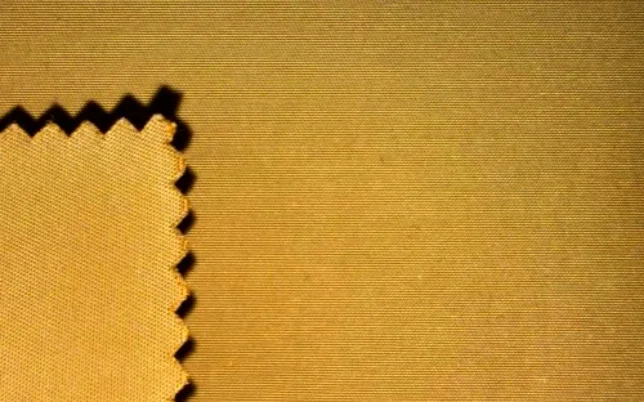
For an everyday winter puffer with a cotton-like surface and some structure, nylon-cotton, polyester-cotton, and polyester-nylon-cotton interwoven fabrics are worth sampling. The useful question isn't which fiber mix is best on paper. It's which finished fabric gives your jacket the right shape and holds up to its sewing, care, and wear requirements.
This guide focuses on shells for padded bombers, quilted jackets, and insulated parkas, particularly styles with synthetic filling. It is not a comparison of ultralight down-jacket fabrics. The CC Textile references below are starting points for development, not a list of fabrics already approved for every insulated garment.
Start with the construction, not just the composition
Here, interwoven means using different fiber materials in the warp and weft yarn systems: nylon filament warp with cotton spun weft, for example. In a blended yarn, different fiber types are combined within the yarn itself. A fabric can use both approaches, such as a blended yarn in one direction and a different yarn in the other.
That is why a composition label alone isn't enough. Ask for the fiber content and yarn specification in each direction, the weave, fabric density, and finishing route. A three-fiber percentage breakdown does not tell you where each fiber sits.
Keep shell weight separate from insulation weight, too. GSM is fabric mass in grams per square meter, not a warmth rating. The filling, its loft, and the complete garment construction all matter to thermal performance.
Nylon-cotton: check the hand where the jacket bends
For a cotton-influenced look, nylon-cotton is a useful sampling direction. Start by deciding what the fabric needs to do around the insulation.
Drape it over the proposed filling, then fold it into a collar or pocket flap. Does it make the rounded shape you want, or stand away from it? A crisp hand may suit an insulated field jacket but feel too boardy for a softly rounded puffer.
Don't ask only for a soft finish. Send a hand reference and identify the parts of the garment where flexibility matters. Approve the finished fabric rather than relying on an unfinished development swatch.
Polyester-cotton: compare the appearance after care
For a two-fiber polyester-cotton brief, make the care requirement part of the first sample request. A neat-looking swatch is only the beginning.
Evaluate the fabric before and after the intended washing and drying procedure. Check dimensional change in both warp and weft, surface creasing, and the appearance of sewn seams. AATCC's laundering methods distinguish fabric dimensional change, garment dimensional change, and appearance after laundering; choose assessments that match what you need to approve.
A catalog note on naming: our Polyester/Cotton collection also contains three-fiber polyester-nylon-cotton fabrics. For a strictly two-fiber requirement, ask us to confirm a matching composition rather than selecting by the category name alone.
Polyester-nylon-cotton: find out what the third fiber changes
Three fibers give a developer more construction options, but they don't automatically produce a better shell. Ask which yarn carries the nylon, which carries the cotton, and whether any yarn is itself blended.
Then look at the weave and yarn sizes. Comparing two different twills is a comparison of complete fabric constructions, not a controlled test of fiber content alone. The samples need to show whether those differences help your particular jacket.
Three CC Textile references for a first sample request
These are published catalog specifications, not side-by-side garment test results. The current product listings describe uniform, overshirt, and utility or workwear applications. Using them for a puffer shell is a development proposal that still needs construction review, sampling, and performance verification.
CC-NC015: a nylon-cotton twill reference
CC-NC015 nylon-cotton 2/2 twill is listed as 35% nylon and 65% cotton, at 150 GSM, with a 70D × 21s yarn specification. The recorded finished width is 148 cm.
Use it as one reference for evaluating a cotton-rich twill face and how the finished fabric bends over padding. Its catalog specification does not establish the hand of your requested finish or its ability to retain your chosen filling.
CC-PC-103: a three-fiber twill at a similar listed weight
CC-PC-103 polyester-nylon-cotton twill is listed as 46% polyester, 8% nylon, and 46% cotton, at 148 GSM. It uses a 2/1 twill construction and a 90D × 40s yarn specification.
This makes it a useful catalog comparison with CC-NC015: their listed weights are close, while their weave and yarn specifications differ. Neither weight nor composition tells us which will produce the better collar shape or cleaner quilting.
CC-PC-104: a lighter plain-weave comparison
CC-PC-104 plain-weave fabric is listed at 120 GSM, with 78% polyester, 9% nylon, and 13% cotton. Its yarn specification is 90D × 45s T/C.
Although its product name says T/C Plain Weave, the full fabric composition contains three fibers. Consider adding it to the sample request when reducing shell weight is part of the brief. Lower GSM does not, by itself, establish greater softness, better packability, or adequate fill retention.
How to narrow the shortlist before bulk approval
Take a development brief for a matte, quilted winter jacket with synthetic batting and a softly rounded collar. The following is a proposed comparison, not a completed CC Textile test case.
Begin with CC-NC015 and CC-PC-103. Add CC-PC-104 only when the lower listed shell weight is relevant. Before ordering trial yardage, confirm the requested finish, usable width, care requirements, minimum order quantity, and delivery needs. Remove options that cannot meet the project's non-negotiable requirements.
For the remaining candidates, make comparable quilted panels and a collar mock-up using the same insulation, lining, pattern, and quilting layout. Start with consistent sewing conditions and record any needle, thread, tension, or feed adjustments needed for each fabric. Seam puckering can have several causes; don't reject a shell before checking whether the sewing setup is responsible.
Compare the finished face, collar flexibility, quilting definition, and any visible fiber migration. Repeat the review after the agreed care procedure. Photograph the same areas under consistent lighting and keep the fabric code and finish identification with each sample.
Use the results to make the decision. For this brief, a candidate that remains too stiff at the collar after an acceptable finish adjustment should leave the shortlist. A fabric that looks right but cannot meet the agreed care or fill-retention requirement should not move to bulk. Carry forward the options that meet the mandatory requirements, then compare price, usable width, and garment consumption on equivalent terms.
Keep catalog data, sample observations, and test results separate. A note about collar flexibility is not a tear-strength result, and a clean-looking panel is not proof of long-term fill retention.
What to verify before calling the shell wind-resistant or waterproof
The three product pages record a Grade 4 Water-Repellent finish. Confirm the test method, tested finish, and care history behind that description. Do not treat the wording as a documented result under a particular standard or as a waterproof rating.
For airflow, use an agreed method such as ASTM D737, with consistent conditions, including the pressure differential. Fabric construction and finishing can affect air permeability.
For surface water repellency, AATCC TM22 evaluates resistance to wetting. A water-repellent finish helps limit surface wetting; it does not by itself establish waterproof performance.
For resistance to water penetration under hydrostatic pressure, use an appropriate method such as AATCC TM127. A waterproof garment also needs a suitable seam and closure design. A spray-test rating cannot replace that assessment.
Put the method, acceptance target, and required care cycles into the specification. Also agree on tear strength, abrasion, seam performance, and colorfastness requirements, including wet and dry crocking where relevant. Assess fill retention with the actual insulation and garment assembly. A switch from synthetic filling to down requires a separate review of downproof performance.
Request samples with the garment in mind
For an initial comparison, ask CC Textile about CC-NC015 and CC-PC-103, with CC-PC-104 as an optional lighter reference. Include a garment image or sketch, your target hand, filling and lining details, quilting layout, color, intended care procedure, required performance, estimated quantity, and delivery timing.
Ask which finishes and samples are available, and which existing test reports apply to the proposed fabric. Our published sample terms provide free A4 swatches with shipping paid by the customer; fabric samples by the meter are charged. Confirm availability, charges, and dispatch timing before arranging trials.
Send your winter jacket fabric brief to CC Textile. Mention the fabric codes and the decision you need the samples to answer: a softer collar, cleaner quilting, lower shell weight, or better appearance after care. That gives the sampling work a clear purpose.
Frequently Asked Questions
Which CC Textile fabrics should I sample for a winter puffer jacket?
For a first development comparison, ask about CC-NC015, a 150 GSM nylon-cotton 2/2 twill, and CC-PC-103, a 148 GSM polyester-nylon-cotton 2/1 twill. Add the 120 GSM CC-PC-104 plain weave when lower shell weight matters. These are catalog references, not blanket approvals for puffer jackets. Confirm the finished construction and evaluate them with your insulation, lining, sewing setup, and care requirements.
Is an interwoven fabric the same as a fabric made from blended yarn?
Not necessarily. In this guide, interwoven describes different fiber materials used in the warp and weft yarn systems. A blended yarn combines different fiber types within the yarn itself. A fabric can use both approaches. To understand a nylon-cotton or polyester-cotton fabric, request the fiber content and yarn specification in each direction, not just the overall composition.
Does a Grade 4 water-repellent finish mean the fabric is waterproof?
No. Confirm the test method and care history behind the grade before interpreting it. Surface water repellency and resistance to water penetration are different properties. AATCC TM22 evaluates resistance to surface wetting; AATCC TM127 evaluates resistance to water penetration under hydrostatic pressure. A waterproof jacket also needs appropriate seams and closures. A finish description alone does not verify the performance of the finished garment.
Can the same shell fabric be used with synthetic filling and down?
Not automatically. Evaluate the shell with the actual filling, lining, and sewing construction. Review quilted samples before and after the intended care procedure, and agree on a suitable fill-retention assessment. Approval with one synthetic insulation does not establish suitability for another, and a down-filled version needs a separate downproof assessment. Confirm the complete material combination before bulk production.