Fabric development & sourcing insights

Practical guidance for fabric sourcing and development.

Articles on woven fabric selection, finishing, performance, testing and bulk-production decisions for apparel sourcing teams.

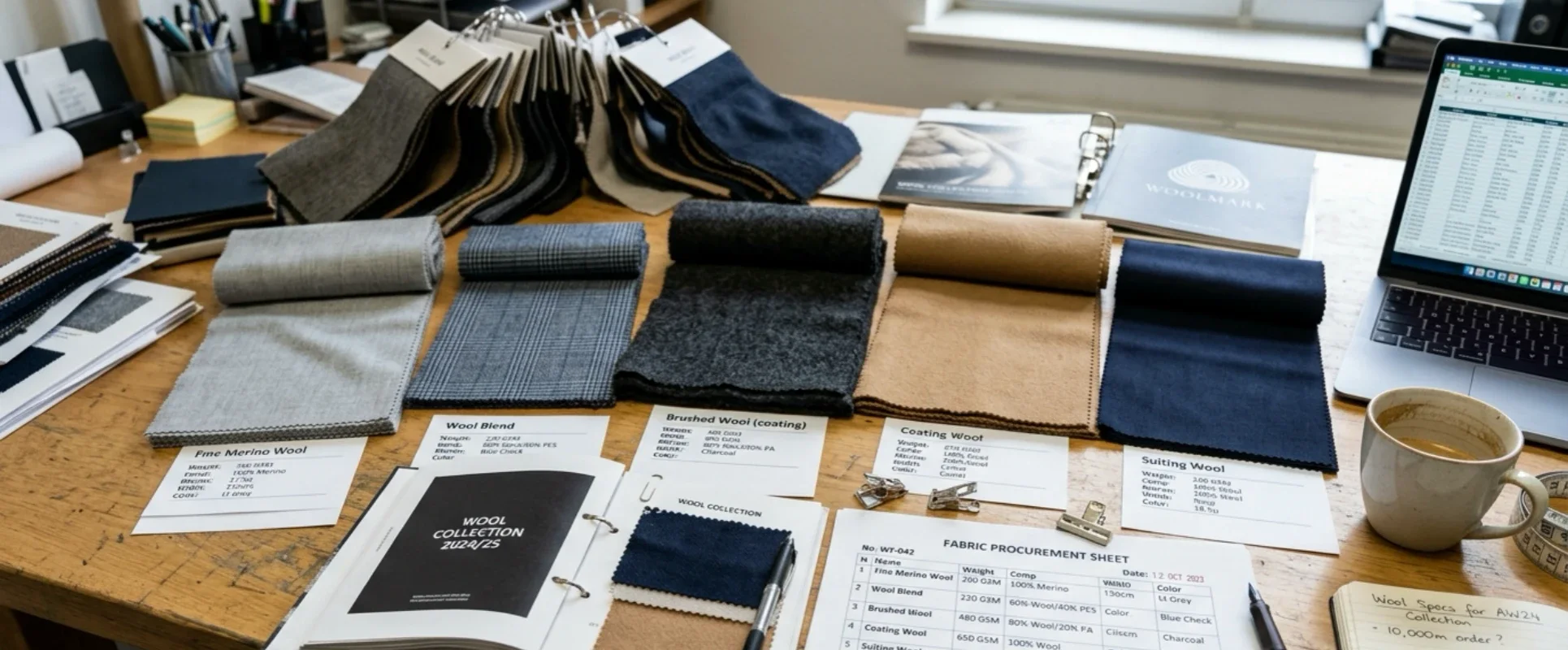
Apparel buyer comparing Merino wool and wool-blend fabrics for garment sourcin

Fabric insight

Wool Fabric for Apparel: What Buyers Should Check Before Sourcing

Two wool fabrics can have the same composition and GSM but behave very differently in a finished garment. Fibre fineness, construction, blend, finishing, shrinkage, pilling and care requirements all matter. This guide explains what apparel buyers should check before approving wool fabric for tailoring, coats, workwear or performance clothing.

Read article →
Seam slippage and needle-line tearing in 40D nylon taffeta lining for a down jacket

Fabric insight

Why Jacket Linings Tear at the Seams

Jacket lining failure is not always caused by low fabric strength. Yarn slippage, needle damage, stitch density and excessive softener can all weaken a seam. A 40D nylon taffeta project shows why finished-fabric testing matters.

Read article →
Dark army green nylon fabric before and after AATCC TM16.3 xenon-arc lightfastness testing

Fabric insight

Why Fabric Fails Lightfastness Testing After Approval

Fabric can fail lightfastness testing because of its colour system, finishing route or a submitted specimen that does not represent bulk production. This article examines an AATCC TM16.3 failure involving dark army green nylon and the controls buyers should set before approval.

Read article →
Buyer comparing two similar woven fabric samples with different GSM, density and finishing specifications

Fabric insight

Why Does the Same Fabric Have Different Prices?

Two fabrics can have the same composition and appearance but different yarns, construction, finishing durability, testing and quality-control scope. This guide explains why fabric prices vary and how buyers can compare quotations without creating hidden production risk.

Read article →
20,000 mm three-layer waterproof fabric with nylon Ripstop face, TPU membrane and knitted backer

Fabric insight

20,000 mm Waterproof Fabric: Is Higher Always Better?

A 20,000 mm waterproof rating describes hydrostatic resistance, but it does not determine comfort, hand feel, fabric noise or packability. This guide explains how buyers should compare 5K, 10K, 15K and 20K waterproof fabrics and what to specify beyond the headline number.

Read article →