
Fabric insight
20,000 mm Waterproof Fabric: Is Higher Always Better?
A 20,000 mm waterproof rating describes hydrostatic resistance, but it does not determine comfort, hand feel, fabric noise or packability. This guide explains how buyers should compare 5K, 10K, 15K and 20K waterproof fabrics and what to specify beyond the headline number.
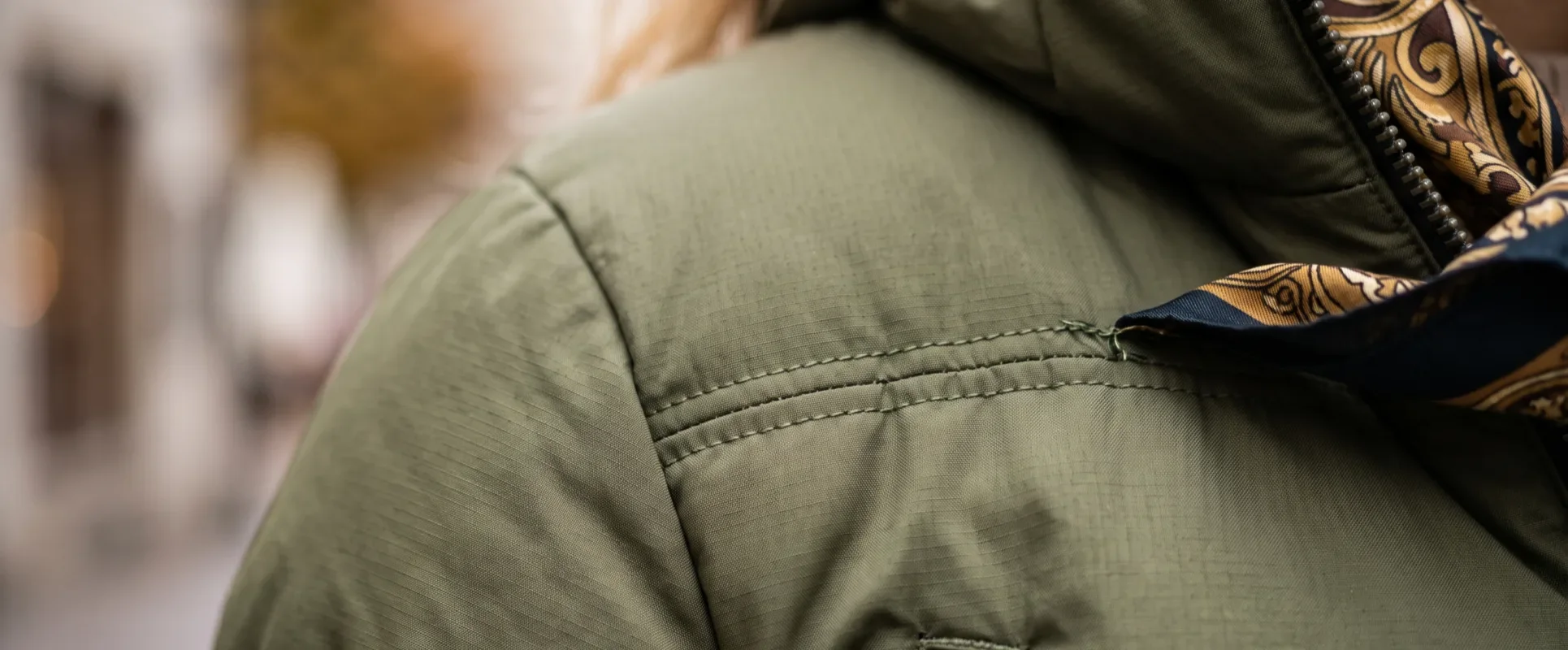
A 20,000 mm waterproof fabric is not automatically the right choice for every outdoor jacket. The figure describes resistance to water penetration under a defined hydrostatic pressure test. It does not describe moisture-vapour transfer, fabric noise, hand feel, finished GSM, packability or garment-level leakage.
Is 20K waterproof good? It can be appropriate for a ski jacket, technical shell or demanding hiking-shell project. However, the decision still depends on the intended garment, fabric construction, target performance and finishing route.
For sourcing teams comparing 10K vs 20K waterproof ratings, the first question should not be “Which number is higher?” It should be “Which specification is appropriate for this product, and how will it be verified?”
1. What Does 20,000 mm Actually Mean?
The 20,000 mm figure refers to hydrostatic head. In simplified terms, it represents the pressure generated by a 20,000 mm column of water under the specified test conditions.
It does not mean that a jacket can be worn under 20 metres of water. It also does not state how long the result will be retained after washing, flexing or extended use.
ISO 811 is one method used to determine a fabric’s resistance to water penetration under hydrostatic pressure. Other methods may also be specified by the customer or appointed laboratory.
A useful test report should identify:
• The test method
• The specimen condition
• Whether the result is initial or after washing
• The pressure increase rate or relevant test parameters
• The number of specimens tested
• The reported result and required minimum
Two fabrics both described as “20K waterproof” should not be treated as equivalent until their test methods and conditions have been compared.
Hydrostatic head also applies to the tested fabric specimen. It does not confirm that the finished jacket will resist water at seams, zipper areas, pocket openings or damaged seam tape.
2. 5K vs 10K vs 15K vs 20K Waterproof Fabric
The following ranges are practical development references rather than universal product grades. Final targets should be established according to the garment, expected exposure, construction and customer test protocol.
5K — Common lower market reference
End-use context: 5,000 mm appears in the market as a lower waterproof rating for products intended for less demanding exposure. It is included here as a comparison point and is not presented as a CC Textile project case.
What else matters: Garment construction, intended weather exposure, weight and the exact hydrostatic-head test method.
10K — Lightweight rain jacket or general outdoor outerwear
CC Textile project reference: Approximately 10,000 mmH₂O has been used for lightweight rain jackets and general outdoor outerwear.
What else matters: Finished weight, packability, face-fabric strength, MVTR, surface wet-out and seam construction. A lightweight waterproof fabric can meet a pressure target but still feel too bulky after lamination if finished GSM is not controlled.
15K — Hiking shell or outdoor hard shell
CC Textile project reference: Approximately 15,000 mmH₂O has been used for hiking shells and outdoor hard shells.
What else matters: Moisture-vapour transfer, abrasion and tear requirements, lamination stability, hand feel and performance retention after washing.
20K — Ski jacket, technical shell or higher-target hiking shell
CC Textile project reference: Approximately 20,000 mmH₂O has been used for ski jackets and technical shells. A European 3L hiking-shell project also specified 20,000 mmH₂O together with an MVTR target of 15,000 g/m²/24h under the project’s agreed test conditions.
What else matters: Membrane selection, MVTR test method, fabric noise, finished GSM, packability, bonding, backer selection and seam-tape compatibility.
These ratings should not be used as a universal rule. A well-developed 10K fabric may be more appropriate for a packable rain jacket than a heavier 20K laminate. Conversely, a technical ski shell may justify a 20K target because of the intended conditions and product positioning.
Buyers preparing an RFQ can find a broader list of parameters in our guide to waterproof fabric specifications.
3. Why 20K Can Still Make a Bad Jacket
A high hydrostatic-head result addresses only one performance area.
20K with unsuitable moisture management
A fabric may resist external water penetration but still feel wet inside if moisture vapour cannot move through the finished laminate at an appropriate rate. Perspiration, temperature differences, activity level and limited garment ventilation can all contribute to internal condensation.
MVTR should always be linked to its test method and units. Results produced under different methods or environmental conditions are not directly interchangeable.
ASTM E96/E96M covers water-vapour transmission testing, while ISO 11092 measures thermal and water-vapour resistance, including Ret. MVTR and Ret describe performance differently, so a sourcing specification must identify the required method instead of requesting only “breathable fabric.”
Our related article explains in more detail why waterproof jackets can feel wet inside even when the main fabric does not leak.
20K with excessive noise or stiffness
Hydrostatic-head testing does not evaluate the sound produced when the garment moves. Membrane hardness, film thickness, adhesive application, face-fabric construction and backer selection can all influence fabric noise.
A technically compliant laminate can still be rejected during garment sampling if it sounds too crisp or feels too stiff for the intended shell.
20K with excessive finished GSM
Buyers sometimes specify the face-fabric weight but omit the finished laminate GSM. The membrane, adhesive and knitted backer all add weight.
If finished GSM is not controlled, a 3-layer waterproof fabric may meet its laboratory target but produce a jacket that is heavier or less packable than planned.
20K with poor surface water repellency
Hydrostatic resistance and surface water repellency are different properties. A membrane may continue resisting water penetration while the face fabric wets out because the DWR performance has declined.
Wet-out does not automatically mean membrane failure, but it can increase surface weight, affect drying behaviour and reduce perceived comfort.
For one project-specific reference, CC Textile evaluated DWR using AATCC 22 with an initial rating of 100 and a requirement of not less than 80 after 10 wash cycles. That requirement should not be applied automatically to every fabric or customer programme.
4. Membrane Selection: TPU, PU, Softness and Noise
“TPU vs PU membrane” is common sourcing language, but it can be imprecise. TPU is a thermoplastic polyurethane. In many fabric discussions, PU refers to a liquid-applied coating, while TPU refers to a film used in lamination.
CC Textile has worked with PU-coated fabrics and TPU membrane laminates. Neither route should be selected by chemistry name alone.
Buyers should also consider:
• Film or coating thickness
• Softness and flexibility
• Fabric noise during movement
• Membrane colour and opacity
• Adhesive compatibility
• Bonding conditions
• Finished hand feel
• Target MVTR
• Hydrostatic-head retention
• Compatibility with the selected face fabric and backer
A European 3L hiking-shell project illustrates why these details matter.
The fabric construction was:
• Nylon Ripstop face fabric
• TPU membrane
• Knitted backer
The customer specified a target of 20,000 mmH₂O hydrostatic head and 15,000 g/m²/24h MVTR. The initial request was for a low-transparency TPU membrane to reduce visible membrane appearance or colour show-through.
After lamination, however, the resulting fabric produced too much noise and did not have the intended softness.
The membrane was changed to a softer white TPU. The revised laminate had noticeably lower fabric noise and a softer hand feel. It was then re-tested and met the customer’s project requirements.
The case shows why a membrane should not be approved from a technical data sheet alone. Colour, opacity, softness and sound can change the suitability of the finished 3-layer waterproof fabric even when the hydrostatic-head target remains the same.
For similar developments, evaluation should use the actual face fabric, membrane, adhesive route and backer rather than an isolated membrane sample.
5. Lamination Matters as Much as the Membrane
A 3L waterproof fabric is a complete system:
Face fabric + adhesive system + membrane + knitted backer
Changing one component can affect the other three.
A lightweight nylon Ripstop face may support low weight and packability, but its surface structure, yarn density and dimensional stability must work with the chosen lamination process. A softer membrane can improve hand feel, but its bonding behaviour and final waterproof performance still require confirmation.
The knitted backer also affects:
• Next-to-skin feel
• Fabric flexibility
• Finished GSM
• Moisture movement
• Laminate stability
• Noise during garment movement
Lamination parameters such as adhesive selection, adhesive coverage, temperature, pressure and curing conditions influence the bond. A membrane with a strong individual test result cannot compensate for an unstable laminate.
Buyers should therefore test the completed coated or laminated fabric, not only the individual membrane. Where wash durability is required, the specification should state which properties must be re-tested after the agreed number of wash cycles.
Layer construction also changes the sourcing decision. A 2L fabric normally requires a separate lining or garment solution, a 2.5L construction uses a protective print or surface treatment on the membrane side, and a 3L fabric bonds the face, membrane and backer into one material. Our 2L, 2.5L and 3L waterproof fabric overview explains these construction differences within the wider specification process.
6. What Buyers Should Specify Besides 20,000 mm
A useful waterproof-fabric RFQ should include more than “nylon, breathable, 20K waterproof.”
Sourcing teams should specify:
• Intended garment: ski jacket, hiking shell, rain jacket, workwear outerwear or another application
• Fabric construction: coating, 2L, 2.5L or 3L
• Face-fabric composition: nylon, polyester or stretch blend
• Face construction: Ripstop, plain weave, twill or another structure
• Yarn size or denier
• Target finished GSM, not only face-fabric GSM
• Usable width
• Hydrostatic-head requirement
• Required hydrostatic-head test method
• Initial requirement and any after-wash requirement
• MVTR or Ret target
• Moisture-vapour test method, units and test conditions
• Air-permeability limit where wind resistance is part of the specification
• Required hand feel and flexibility
• Acceptable fabric-noise level
• Membrane colour, opacity and visual requirements
• DWR test method, initial rating and wash-durability requirement
• Tear, tensile and abrasion requirements where relevant
• Lamination bond or delamination requirements
• Seam-tape compatibility
• Colour-development and lab-dip requirements
• Sample approval process
• Required third-party laboratory, such as SGS, Bureau Veritas or a customer-appointed laboratory
• Bulk-production testing frequency and acceptance criteria
If a project includes a no intentionally added PFAS requirement, it should be stated separately from the C0 DWR request. Chemical documentation, production controls, laboratory test scope, test method and detection or reporting limits should be agreed for that specific project. C0 does not by itself confirm the absence of all PFAS.
Fabric approval should also be separated from garment approval. A fabric can pass hydrostatic-head testing while a finished jacket leaks through incomplete seam taping, lifted tape, zipper areas or other construction points. These risks are discussed further in Why Ski Jackets Fail.
Conclusion
A 20,000 mm waterproof fabric can be suitable for a ski jacket, technical shell or higher-target hiking shell. It is not automatically better than a 10K or 15K option for every product.
The useful specification is the one that balances hydrostatic resistance with MVTR, finished GSM, packability, hand feel, fabric noise, lamination stability and garment construction.
If buyers have an existing fabric sample, garment photo, specification sheet or target performance requirement, CC Textile can review the construction through its fabric development process and recommend an appropriate sampling and testing route.
Buyers can also follow CC Textile’s fabric-development updates on LinkedIn or contact the team to discuss a specific waterproof-fabric project.
Frequently Asked Questions
What does 20,000 mm mean for waterproof fabric?
It refers to hydrostatic-head resistance under a defined test method. It does not describe MVTR, DWR durability, hand feel, fabric noise or finished-garment waterproofness.
Is 20K waterproof fabric better than 10K?
Not for every garment. A 20K fabric may suit a ski jacket or technical shell, while a lighter 10K construction may be more appropriate for a packable rain jacket. End use, test method, MVTR, weight and construction must be considered together.
Can a 20,000 mm waterproof fabric still feel uncomfortable?
Yes. Poor moisture-vapour transfer, excessive finished GSM, limited garment ventilation, a stiff membrane or high fabric noise can make a 20K laminate unsuitable despite its hydrostatic-head result.
What should buyers specify besides a 20K waterproof rating?
Specify the test method, garment application, face construction, finished GSM, membrane or coating route, MVTR or Ret method, hand feel, noise, DWR durability, seam-tape compatibility and any required after-wash testing.