
Fabric insight
Workwear Fabric Durability: Abrasion, Tear or Tensile Strength?
A durable fabric for workwear cannot be selected by GSM or fibre composition alone. Abrasion resistance, tear strength and tensile strength measure different failure risks. This guide explains what buyers should test, using a lightweight polycotton workwear jacket project as an example.
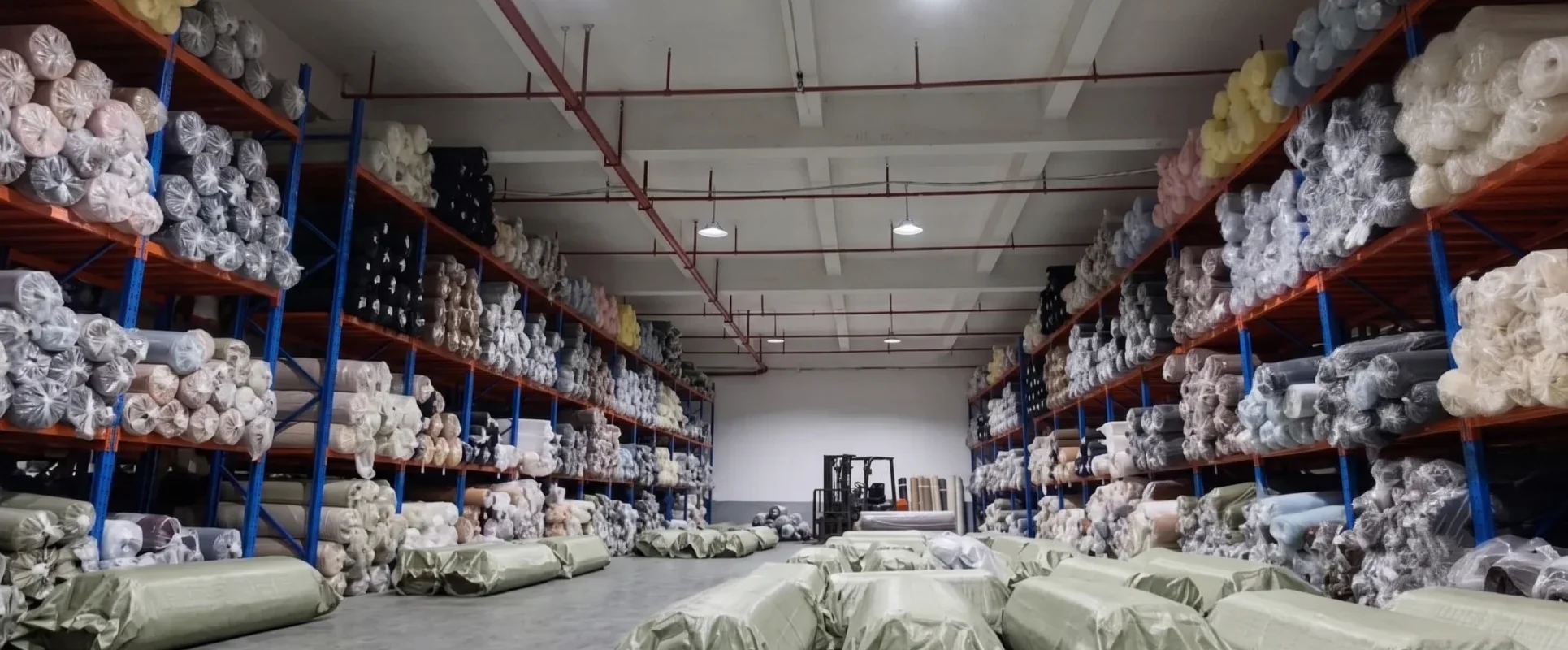
A durable fabric for workwear is not simply a heavy fabric or one described as “high strength”. A workwear jacket may develop surface fuzzing without tearing, survive repeated rubbing but fail after a small cut, or resist tearing while its colour changes during use and washing.
These are different failure modes. They require different tests.
For sourcing teams, the first question should not be “How strong is this fabric?” It should be “What type of damage must this garment resist?”
Abrasion, Tear and Tensile Strength Are Not the Same
Abrasion resistance measures how the fabric surface responds to repeated rubbing. It is relevant to areas that contact tools, worktops, machinery, straps or other rough surfaces.
Tear strength measures how easily an existing cut, puncture or damaged area continues to spread. This matters when fabric can catch on a sharp edge or when a small hole may develop into a larger tear.
Tensile strength measures how much pulling force a fabric can withstand before breaking under the specified test conditions. It evaluates the fabric under a broader pulling load rather than the propagation of an existing tear.
A fabric can perform well in one test and less well in another. A high tensile result does not prove good abrasion resistance, and a high Martindale cycle target does not confirm tear strength.
Surface fuzzing and pilling also need separate attention. They concern appearance and surface condition rather than only the point at which the fabric develops a hole or broken yarn.
Start With the Workwear Jacket’s Real Wear Points
The correct test package depends on how the garment will be used.
A lightweight warehouse jacket, a construction workwear jacket and a garment worn around machinery do not experience the same mechanical stress. Their sleeves, cuffs, pocket edges, shoulders and front panels may also fail in different ways.
Before selecting a workwear fabric, buyers should consider:
• Which areas will rub against tools, benches, belts or equipment?
• Could the fabric catch on sharp or projecting objects?
• Will the jacket be washed frequently?
• Is low weight important for movement or warmer working conditions?
• Does the garment need reinforcement at selected wear points?
• Is the fabric being developed for ordinary workwear or for protective clothing covered by a separate standard?
The last distinction matters. Passing a general fabric durability test does not establish that a garment is suitable for protection against a specific workplace hazard.
What Does a 16,000-Cycle Martindale Test Show?
The Martindale method is widely used when buyers specify workwear fabric abrasion resistance. A specimen is subjected to repeated rubbing under defined conditions and inspected according to the selected method and approval criteria.
The number of cycles alone is incomplete. A useful specification should also identify the test method, pressure or load, abrasive material and assessment endpoint.
Depending on the specification, the laboratory may assess:
• specimen breakdown;
• holes or broken yarns;
• visible surface wear;
• mass loss;
• appearance change;
• surface fuzzing or pilling.
The ISO 12947-2 Martindale method covers the determination of specimen breakdown by inspection at fixed intervals. Other ISO parts address mass loss and appearance change. Pilling and surface fuzzing are covered separately within the ISO 12945 series.
This is why “16,000 Martindale cycles” should not be treated as a complete pass criterion. Two buyers can use the same cycle count but assess different endpoints.
A Lightweight Polycotton Workwear Jacket Case
CC Textile worked on a lightweight twill fabric for a workwear jacket with the following construction:
• Composition: 60% polyester and 40% cotton
• Yarn specification: 50D × 40S
• Fabric weight: approximately 89 GSM
• Weave: twill
• End use: lightweight workwear jacket
The customer required a Martindale assessment at 16,000 cycles. The fabric was inspected for holes, broken yarns, visible wear and surface fuzzing or pilling.
During the initial assessment, pilling became a concern. The fabric specification could not be approved solely because there was no immediate large tear. The surface condition was also part of the customer’s acceptance criteria.
The correction focused on the dyeing and finishing route, including better control of loose surface fibres. The fibre composition and target fabric weight were not used as shortcuts to explain away the problem.
After the process was adjusted and the surface hair was reduced, the fabric was tested again and met the customer’s 16,000-cycle requirement.
This case shows why a lightweight polycotton workwear fabric should be evaluated in its finished condition. Yarn specification and weave establish the base construction, but dyeing and finishing can still affect surface appearance and the result seen during abrasion testing.
Tear Strength Starts After Damage Has Occurred
Tear testing asks a different question: if the fabric is already cut or damaged, how much force is required for the tear to continue?
This is relevant to workwear that may catch on a tool, metal edge, branch or projecting component. A small puncture can become a larger garment failure if the fabric has insufficient tear resistance in the affected direction.
Buyers should specify requirements for both warp and weft directions where applicable. They should also name the test method because Elmendorf, trouser, wing and tongue tear methods do not use the same specimen geometry or produce interchangeable results.
Tear strength was included in the lightweight jacket project, but the method and numerical requirement are project-specific and are not disclosed here. The important sourcing point is that the tear result was assessed separately from the 16,000-cycle Martindale requirement.
Tensile Strength Measures a Different Load
Tensile testing pulls a fabric specimen until it reaches the defined endpoint. Common standards include strip and grab methods, but the buyer must state which method applies.
Tensile strength can be relevant where the garment is subjected to broader pulling forces. It does not reproduce the same failure as abrasion or the propagation of an existing cut.
Tensile testing was not used as a substitute for the abrasion and tear requirements in this project. If tensile strength matters to the intended workwear application, it should be added as a separate specification with warp and weft limits.
A request stating only “high tensile workwear fabric” still leaves several questions unanswered:
• Which test method is required?
• What are the minimum warp and weft results?
• Is elongation also relevant?
• Will the test be conducted before or after washing?
• Is the requirement for the fabric, a seam or the finished garment?
Is Heavier Workwear Fabric Always More Durable?
Higher GSM can provide more material, but it does not automatically produce better workwear fabric durability.
Performance can also be influenced by:
• fibre composition;
• yarn type and quality;
• yarn linear density;
• warp and weft density;
• weave construction;
• surface finishing;
• washing conditions;
• garment reinforcement and seam construction.
The 89 GSM polycotton twill in this project was developed for a lightweight jacket. Its approval depended on meeting the customer’s specified tests, not on comparing its weight with a heavier fabric intended for workwear trousers.
Adding weight without examining the failure mode can also reduce comfort and mobility without solving the original problem. A buyer should therefore select GSM in relation to the garment, working environment and required test results.
CC Textile’s polyester and cotton fabric category provides a starting point for reviewing constructions, but final suitability still needs to be confirmed against the project specification.
Colour Fastness Is Part of Practical Durability
A workwear fabric may remain physically intact but become unacceptable because of staining, colour transfer or visible colour change.
For the lightweight workwear jacket project, rubbing colour fastness and washing colour fastness were tested. Grade 3–4 results were accepted by the customer.
These ratings should not be separated from their test conditions. A buyer’s specification should state the required standard, colour, dry or wet rubbing condition where applicable, washing procedure and minimum grade.
Dark colours, repeated cleaning and contact with other materials can create different risks. The bulk colour and intended care route therefore need to be considered during approval.
What Buyers Should Include in a Workwear Fabric RFQ
An RFQ for durable workwear fabric should describe the garment and its likely failure points before listing laboratory numbers.
A practical specification can include:
• garment type and working environment;
• expected wear points;
• fibre composition;
• yarn specification;
• weave and construction;
• target GSM and usable width;
• abrasion test method;
• load, abrasive and number of cycles;
• definition of failure at the target cycle;
• separate fuzzing or pilling requirement;
• tear test method and warp/weft limits;
• tensile method and limits, if required;
• rubbing and washing colour fastness requirements;
• dimensional stability and washing conditions, if relevant;
• testing stage, such as lab sample, finished fabric or bulk production;
• approved laboratory and report format.
The phrase “abrasion-resistant workwear fabric” is useful for identifying a product direction, but it is not enough for production approval.
Test the Finished Fabric Before Bulk Approval
Greige fabric performance cannot represent every change introduced by dyeing and finishing. For projects affected by surface appearance, colour fastness or mechanical performance, testing should be completed on the finished fabric intended for garment production.
If a result fails, the correction should address the confirmed cause. Increasing GSM, changing fibre content or lowering the approval target without technical review can create a different problem rather than solve the original one.
CC Textile supports buyers through fabric development and project-specific quality and compliance coordination. Testing requirements can be confirmed before sampling so that the method, limits and approval stage are understood by both the buyer and production team.
Testing, inspection and corrective work also carry real costs. This is one reason apparently similar fabrics can receive different quotations, as discussed in Why Fabric Prices Vary.
Textile professionals can also exchange sourcing and testing experience through Textile Alliance. Updates from CC Textile are available on LinkedIn.
The Buyer’s Decision
Abrasion resistance, tear strength and tensile strength answer different questions.
Abrasion asks how the surface handles repeated rubbing. Tear strength asks what happens after damage starts. Tensile strength asks how the fabric behaves under a broader pulling load.
The appropriate combination depends on the garment, fabric construction, working environment, care route and customer specification.
If you have a workwear sample, fabric specification, failed test report or target performance requirement, contact CC Textile for an initial construction and testing review.
#WorkwearFabric #FabricTesting #AbrasionResistance #TextileSourcing #PerformanceWovenFabric
Frequently Asked Questions
Is a higher GSM always more durable for workwear?
No. GSM is only one factor. Yarn specification, density, weave, finishing and the intended wear conditions also affect durability. A heavier fabric can still perform poorly in abrasion or tear testing.
Is 16,000 Martindale cycles enough for workwear fabric?
It depends on the garment and customer specification. The cycle count must be accompanied by the test method, load, abrasive and failure criteria. A jacket and a reinforced workwear trouser may require different targets.
What is the difference between tear strength and tensile strength?
Tear strength measures resistance to the continuation of an existing cut or tear. Tensile strength measures how a fabric behaves when pulled under the specified test method. One result cannot replace the other.
Can a fabric pass abrasion testing but still develop pilling?
Yes. Specimen breakdown and surface pilling are different assessment points. Buyers should state a separate pilling or appearance requirement if surface condition is part of approval.