
Fabric insight
PU Coated Fabric vs TPU Laminated Fabric: What Buyers Need to Compare
PU coated fabric and TPU laminated fabric can both be used for waterproof jackets, but they are built differently. Buyers should compare structure, weight, hand feel, noise, backer protection, seam sealing and test requirements rather than hydrostatic head alone.
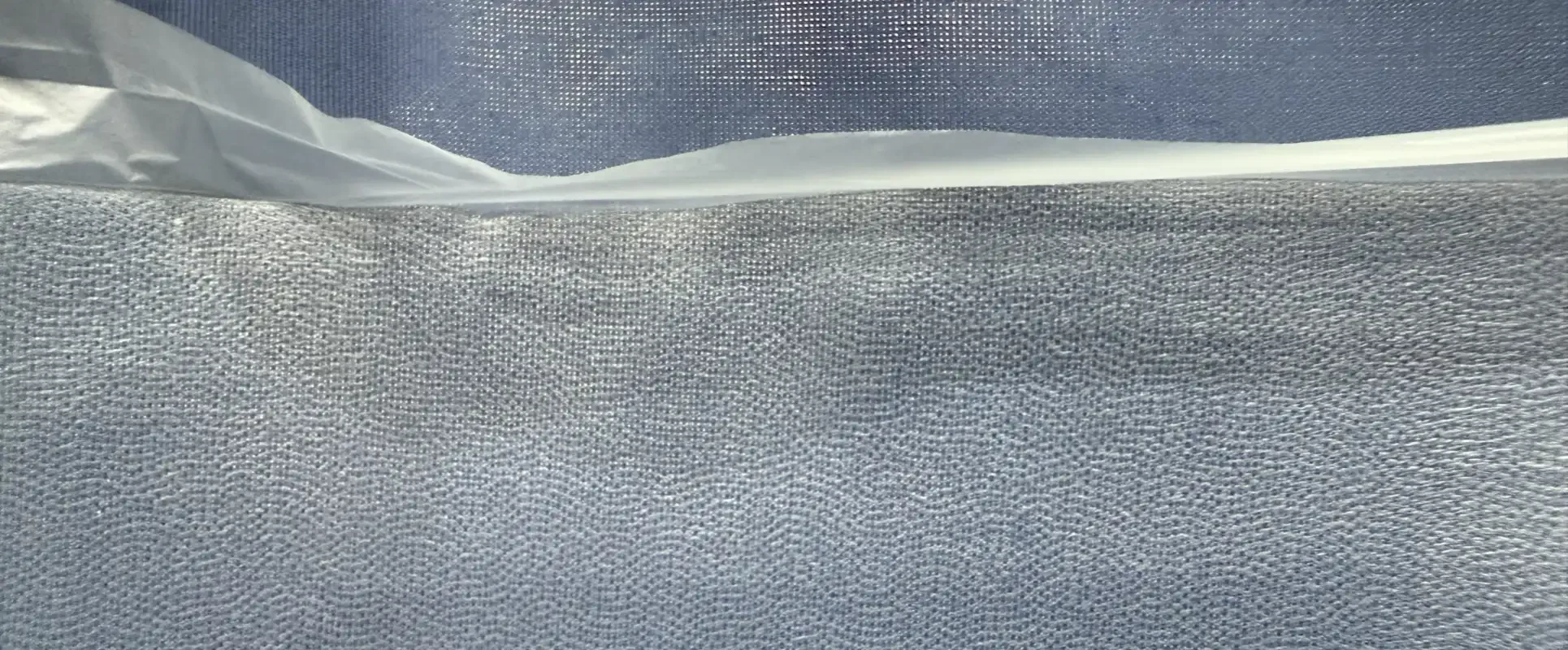
When a buyer asks for a **waterproof fabric**, that description can lead to very different material constructions.
One supplier may offer a lightweight woven fabric with a PU coating on the reverse side.
Another may propose a face fabric laminated to a TPU membrane.
Both fabrics may achieve a required hydrostatic pressure.
But that does not mean they are interchangeable.
The difference between **PU coated fabric vs TPU laminated fabric** affects much more than waterproofness.
It can influence:
- finished weight
- hand feel
- fabric noise
- drape
- packability
- moisture-vapour performance
- reverse-side protection
- seam-taping behaviour
- washing durability
- production cost
- final garment construction
For outdoor jacket development, the waterproof layer should therefore be selected together with the face fabric and garment design.
At CC Textile, we work with PU-coated fabrics, TPU membrane laminates and 2-layer and 3-layer constructions. In practice, we do not select one system only because it can reach a certain hydrostatic-head number.
The intended garment needs to come first.
PU Coating and TPU Lamination Are Different Constructions
PU coating and TPU lamination are sometimes discussed as if they were simply two ways of adding waterproof performance.
Technically, they are different structures.
In a PU-coated fabric, polyurethane is applied directly onto the fabric surface, usually on the reverse side of the face fabric.
In a TPU-laminated fabric, a separate TPU membrane is bonded to the textile.
That structural difference affects both processing and the behaviour of the finished material.
A simplified PU-coated structure may look like:
**Face fabric / PU coating**
A TPU laminated 2-layer structure may look like:
**Face fabric / TPU membrane**
A 3-layer structure may look like:
**Face fabric / TPU membrane / knitted or woven backer**
These are not equivalent systems.
Even if all three constructions achieve the same waterproof rating, their hand feel, finished GSM, noise and end-use suitability can be very different.
Buyers should therefore avoid writing only:
“Waterproof fabric, 10,000 mm.”
That specification leaves too many important decisions undefined.
For a more complete view of performance requirements, you can also review our guide to Waterproof Fabric Specifications.
How PU Coated Fabric Is Built
PU coating is applied directly to the fabric during finishing.
The coating can be adjusted according to the required product.
Depending on the construction and coating system, the supplier may change:
- coating amount
- coating formulation
- coating thickness
- application method
- curing conditions
- surface finish
The coating becomes part of the finished fabric.
For many jacket, lining, rainwear and utility applications, this can be an efficient way to add waterproofness and wind resistance without laminating a separate membrane.
### Why PU coating is widely used
PU coating can offer practical advantages.
It can help produce:
- relatively lightweight constructions
- compact fabrics
- wind resistance
- waterproof performance
- controlled reverse-side finish
- commercially efficient constructions
For some applications, a coated fabric may be simpler and lighter than a multi-layer laminate.
However, the result depends heavily on the coating system.
A low coating amount and a heavier coating do not create the same fabric.
The base fabric also matters.
A very lightweight 20D or 30D nylon substrate reacts differently from a heavier polyester or oxford construction.
### PU coating can change the hand feel
A common mistake is to approve the face fabric first and think of the coating as a separate technical step.
In reality, the coating can change the fabric significantly.
After coating, the fabric may become:
- firmer
- less flexible
- heavier
- less air permeable
- different in drape
- different in surface noise
The final result therefore needs to be evaluated after coating.
If the coated fabric feels too stiff, simply changing the face-fabric fibre from polyester to nylon may not solve the problem.
The coating formulation and process may also need to be adjusted.
How TPU Laminated Fabric Is Built
A TPU laminated fabric uses a separate thermoplastic polyurethane membrane that is bonded to the face fabric.
Depending on the garment, this may be a 2-layer or 3-layer system.
### 2-layer construction
A typical 2L structure is:
**Face fabric / TPU membrane**
The membrane is exposed on the inside of the material unless the garment later uses a separate lining.
This can be suitable for many waterproof jackets where the garment construction already includes an internal lining.
### 3-layer construction
A typical 3L structure is:
**Face fabric / TPU membrane / backer**
The backer can be a lightweight knit or another textile layer.
Its purpose is not only visual.
It can help protect the membrane from:
- abrasion
- body contact
- internal friction
- repeated garment movement
A 3-layer construction can also create a more complete shell material that does not require a separate loose lining.
For technical outdoor jackets, this is often an important design consideration.
Buyers comparing **2 layer vs 3 layer waterproof fabric** should therefore think about the garment construction as well as the fabric itself.
Weight, Hand Feel, Noise and Packability
Waterproof rating is only one part of the user's experience.
For jackets, several physical characteristics can be just as important.
### Finished weight
A lightweight waterproof shell may have a strict GSM target.
Adding coating, membrane, adhesive and backer all increase finished weight.
A PU-coated construction may sometimes allow a lighter overall system.
A TPU laminate may provide other advantages, but the membrane and bonding system still add weight.
A 3-layer laminate adds another textile layer.
So buyers should compare **finished GSM**, not only the weight of the face fabric.
A 50 GSM face fabric does not remain a 50 GSM material after coating or lamination.
### Hand feel
Hand feel can change dramatically after waterproof processing.
A fabric that feels soft before processing may become firmer after coating.
A membrane laminate may feel:
- smooth
- rubbery
- crisp
- soft
- dense
- flexible
depending on the membrane, adhesive system and textile construction.
This is why “soft waterproof fabric for outdoor jackets” cannot be defined by fibre content alone.
The complete finished structure needs to be sampled.
### Fabric noise
Noise is especially important in outdoor jackets.
Some shells produce a noticeable rustling sound when the wearer moves.
This can be affected by:
- face-fabric density
- yarn type
- calendaring
- coating
- membrane stiffness
- adhesive system
- backer construction
A very technical-looking fabric may still be unsuitable if the target customer wants a quiet, soft urban or hiking jacket.
Low-noise requirements should therefore be discussed during development, not after bulk production.
### Packability
A lightweight wind shell or emergency rain jacket may need to pack into a very small volume.
A stiffer laminate or heavier backer can reduce packability.
For this type of garment, the buyer may prioritise:
- low GSM
- thin construction
- soft folding behaviour
- low bulk
A more durable 3-layer hiking shell may accept greater weight and bulk in exchange for protection and long-term use.
Again, the best structure depends on the garment.
Why the Face Fabric and Backer Still Matter
The waterproof layer does not work in isolation.
The face fabric remains a major part of the final material.
For example, a TPU membrane laminated to a 20D nylon face does not behave like the same membrane laminated to a 75D polyester face.
The two laminates can differ in:
- tear resistance
- abrasion resistance
- weight
- drape
- surface appearance
- noise
- dimensional stability
- finished hand feel
This is why specifying only:
“TPU membrane, 10,000 mm”
is incomplete.
### Face fabric
The face layer determines many of the garment's visible and mechanical characteristics.
Buyers need to consider:
- fibre content
- denier
- weave
- density
- ripstop construction
- stretch
- DWR
- abrasion requirement
- tear requirement
- desired hand feel
For example, a very light hiking shell and a workwear waterproof jacket may both use TPU membranes, but the face fabrics can be completely different.
You can review more woven constructions in our Fabric Categories.
### Backer
In a 3-layer fabric, the backer also changes the finished material.
A lightweight knitted backer can help protect the membrane while keeping the material relatively soft.
A heavier or denser backing structure may increase durability but also increase:
- GSM
- stiffness
- warmth
- bulk
The bonding quality between all three layers is also important.
A 3L fabric should therefore be evaluated as one composite system, not as three independent materials.
Hydrostatic Head Does Not Describe the Whole Material
Hydrostatic head is an important waterproof test.
But it answers one specific question:
How much water pressure can the tested material resist under the specified test conditions?
It does not describe the entire performance of a jacket fabric.
Two materials may both achieve 10,000 mm or 20,000 mm hydrostatic pressure while feeling completely different.
One may be:
- lighter
- softer
- quieter
- more packable
while another may be:
- heavier
- more robust
- stiffer
- more abrasion resistant
This is why buyers should not select a waterproof fabric using the hydrostatic-head value alone.
We explain this in more detail in 20,000 mm Waterproof Fabric.
### Breathability also needs its own test
Waterproofness and moisture-vapour performance are different properties.
A high hydrostatic-head result does not automatically tell the buyer how the fabric performs for moisture-vapour transmission.
If breathability is important, the buyer should define:
- the required test method
- target value
- finished construction
- condition of the sample
Different moisture-vapour test methods can produce different types of results, so the method should always be stated.
### Durability matters
Initial waterproof performance is only one checkpoint.
Depending on the garment programme, buyers may also need to consider performance after:
- washing
- flexing
- abrasion
- ageing
- repeated use
A technically impressive initial hydrostatic-head result is not enough if the construction later delaminates or the coating loses performance during the required durability test.
### Seam sealing matters too
A waterproof fabric does not automatically make a waterproof garment.
The garment contains seams.
For many shell jackets, seams need to be sealed with compatible seam tape.
The fabric supplier and garment factory therefore need to consider:
- membrane or coating surface
- seam-tape compatibility
- bonding temperature
- pressure
- application speed
- garment construction
A fabric may pass waterproof testing as a sheet material but still create problems if the selected seam tape does not bond properly.
This is another reason the complete garment process needs to be considered during fabric development.
Questions Buyers Should Ask Before Choosing the Structure
Before deciding between PU coated fabric and TPU laminated fabric, buyers should define the project more clearly.
### 1. What garment are you making?
Is it a:
- lightweight rain jacket
- windbreaker
- hiking shell
- ski jacket
- workwear jacket
- cycling jacket
- running jacket
- casual waterproof jacket?
The product category changes the correct material balance.
### 2. What is the target finished GSM?
Specify the weight of the final fabric, not only the face fabric.
If the target is 120 GSM after lamination, that is very different from specifying a 120 GSM base fabric.
### 3. What waterproof performance is required?
Provide the hydrostatic-head target and test method.
Do not write only “waterproof”.
### 4. Is moisture-vapour performance required?
If yes, provide the required test method and limit.
Do not assume that waterproof rating also describes breathability.
### 5. How soft should the material feel?
If hand feel is important, provide a physical reference.
For example:
“We want this waterproof level, but the fabric must be softer and quieter.”
That gives the supplier a useful development target.
### 6. Is fabric noise important?
For hiking, hunting, urban outdoor or premium jackets, fabric noise can affect the final product significantly.
Mention this before sampling.
### 7. Do you need 2L or 3L?
If the garment will use a separate lining, a 2-layer laminate may be sufficient.
If the material itself needs an internal protective textile layer, a 3-layer construction may be more appropriate.
The correct answer depends on the garment.
### 8. What should protect the reverse side?
For PU coated fabric, the coating may remain exposed or may be protected by the garment lining.
For TPU laminate, the membrane may be exposed in a 2L system or protected by a backer in a 3L system.
This needs to be decided together with the garment construction.
### 9. What durability tests are required?
Depending on the buyer, this may include:
- washing
- abrasion
- tear
- peel strength
- hydrostatic pressure after washing
- dimensional stability
Testing should reflect the actual end-use requirement.
### 10. Will the garment be seam taped?
If yes, seam-tape compatibility should be evaluated before bulk production.
The final coating or membrane surface matters.
### 11. What is the commercial target?
PU coating and TPU lamination involve different materials and manufacturing processes.
Cost should therefore be discussed together with:
- performance
- garment positioning
- order quantity
- target weight
- construction complexity
The technically most complex option is not automatically the commercially best option.
PU Coated or TPU Laminated? Start With the Garment
There is no universal answer that PU coated fabric is better than TPU laminated fabric, or that TPU membrane construction is always more advanced.
They solve waterproof requirements in different ways.
For some garments, a PU-coated woven fabric may provide the right combination of weight, waterproofness, hand feel and price.
For another project, a 2-layer TPU laminate may make more sense.
For a technical shell requiring a protected membrane and integrated inner surface, a 3-layer laminate may be the better starting point.
The correct decision comes from comparing the complete system:
**Face fabric + waterproof layer + backer + finishing + finished GSM + testing + seam sealing + garment design**
Hydrostatic head is part of that decision.
It is not the whole decision.
If you are developing a waterproof outdoor jacket, you can review our Fabric Development process and send us the garment type, target GSM, waterproof requirement, breathability requirement, hand-feel target and preferred construction.
We can then compare suitable PU-coated and TPU-laminated options from the finished garment requirement rather than selecting a structure from one test number alone.
For buyers looking for an additional textile industry resource covering sourcing and technical discussions, Tex-Alliance can also be used as a wider industry reference.
You can also follow CC Textile on TikTok for updates on outdoor woven fabrics, coating, lamination and fabric development.
#PUCoatedFabric #TPUMembrane #WaterproofFabric #LaminatedFabric #OutdoorMaterials
Frequently Asked Questions
What is the difference between PU coated fabric and TPU laminated fabric?
PU coated fabric has a polyurethane coating applied directly to the textile surface, while TPU laminated fabric uses a separate TPU membrane bonded to the face fabric. The two constructions can differ in weight, hand feel, noise, backer protection, processing and garment application.
Is TPU laminated fabric always better than PU coated fabric?
No. The better structure depends on the garment, target GSM, waterproof and moisture-vapour requirements, hand feel, durability, seam sealing and commercial target. A PU-coated construction may be more suitable for some products, while a TPU laminate may be better for others.
What is the difference between 2-layer and 3-layer waterproof fabric?
A 2-layer laminate normally consists of a face fabric bonded to a waterproof membrane. A 3-layer construction adds a textile backer that helps protect the membrane and becomes part of the finished shell material.
Is hydrostatic head enough to compare waterproof jacket fabrics?
No. Hydrostatic head measures resistance to water pressure under defined test conditions, but it does not describe hand feel, finished weight, fabric noise, moisture-vapour performance, lamination durability, seam-tape compatibility or overall garment comfort.