
Fabric insight
Why Lightweight Jacket Seams Pucker After Sewing
Lightweight jacket seams may look flat after sewing but pucker after washing or seam taping. A stretch nylon jacket case shows how stitch density, zip shrinkage and fabric tension affect seam appearance.
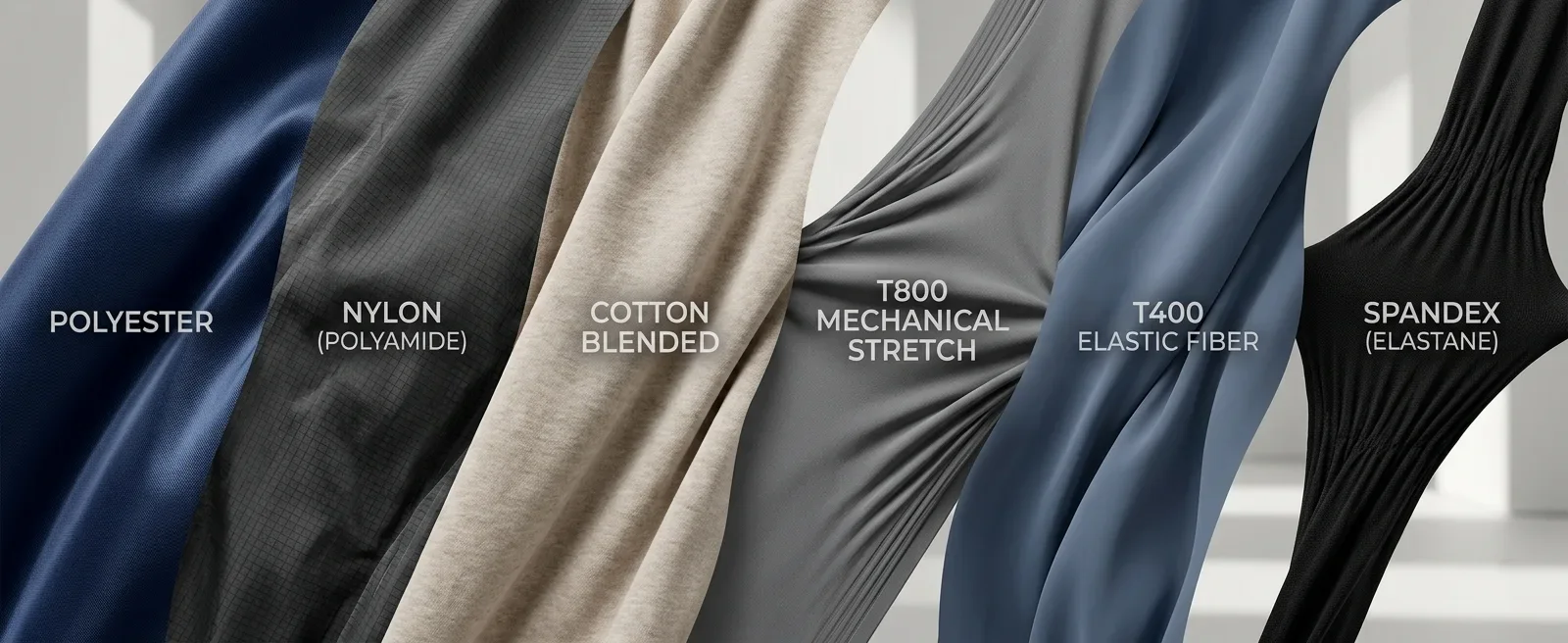
A fabric can look flat during inspection and still produce puckered seams in a finished jacket.
The problem may appear immediately after sewing, after the zip is attached, during seam taping or only after the garment is washed. On lightweight woven fabrics, relatively small differences in stitch density, feeding tension or component shrinkage can become clearly visible.
CC Textile encountered these issues in a lightweight outdoor jacket using a 90% nylon and 10% spandex woven fabric. The specification was 100D × 100D and approximately 120 GSM.
Three practical problems were identified:
• Excessive stitch density compressed and distorted the fabric.
• The original zip and shell fabric behaved differently after washing.
• The stretch fabric was pulled during seam taping, causing the taped seam to deform.
These were garment-processing problems connected to the behaviour of the fabric. They could not be assessed by inspecting an unsewn fabric roll alone.
Why Do Lightweight Jacket Seams Pucker?
Seam puckering is the unwanted wrinkling, gathering or waviness that appears along a sewn or bonded seam.
It can result from one cause or several connected causes:
• Excessive sewing-thread tension
• Excessive stitch density
• Yarn displacement around the needle and thread
• Uneven feeding of the fabric layers
• Different shrinkage between fabric, thread, zip or tape
• Stretching the fabric during sewing or seam taping
• Heat and pressure applied during bonding
• Dimensional changes after washing
• Incompatible fabric and garment construction
Lightweight fabrics tend to show small distortions more clearly because they have less weight and body to conceal changes along the seam.
A stretch woven fabric adds another variable. If it is extended during sewing or taping and then allowed to recover, the seam line may become shorter or more rigid than the surrounding fabric. The result can be a wavy or puckered appearance.
A Lightweight Nylon-Spandex Jacket Case
The representative project used:
• Composition: 90% nylon and 10% spandex
• Yarn specification: 100D × 100D
• Fabric weight: approximately 120 GSM
• Construction: lightweight stretch woven fabric
• Intended use: outdoor jacket
The fabric itself appeared acceptable before garment production. The problems became visible after sewing, washing and seam taping.
This distinction matters for sourcing teams. Fabric inspection can confirm appearance, width, weight, colour and obvious defects. It cannot fully predict how the material will interact with the selected zip, stitch setting and seam-sealing process.
When Stitch Density Is Too High
A higher stitch density is sometimes assumed to produce a cleaner or stronger seam. That is not always the result on lightweight woven fabric.
Each needle penetration creates space for the sewing thread. When too many stitches are placed into a short distance, the fabric yarns may be compressed or displaced. The seam line can become more rigid than the surrounding panel, producing visible puckering.
In this project, the original stitch density was too high. The fabric was being crowded along the seam rather than lying flat.
The sewing parameters were adjusted to reduce the problem.
This does not mean every lightweight fabric requires the same stitch density. The suitable setting depends on:
• Fabric construction and density
• Yarn size
• Fabric stretch
• Needle size
• Sewing-thread size
• Stitch type
• Required seam strength
• Garment appearance
Reducing stitch density without checking seam strength may create another problem. The garment factory needs to find a workable balance between appearance, strength and seam durability.
Thread Tension Is Only One Possible Cause
Seam puckering is often blamed on sewing-thread tension, but changing the tension will not correct every problem.
Tension puckering occurs when excessive sewing-thread tension compresses the fabric after stitch formation. However, similar-looking wrinkles can also be caused by structural jamming, uneven feeding or different shrinkage between materials.
A practical investigation should separate these possible causes.
The garment technician can check:
• Whether puckering appears immediately behind the sewing foot
• Whether it develops after the garment rests
• Whether it is stronger in the warp or weft direction
• Whether it occurs only beside the zip
• Whether it appears only after washing
• Whether pressing temporarily removes it
• Whether seam taping makes it worse
If the wrong cause is identified, lowering the thread tension may reduce seam strength without removing the visible problem.
Why Zips Become Wavy After Washing
A zip and a shell fabric are separate components. They do not necessarily respond to washing, heat and drying in the same way.
If the fabric changes dimension while the zip tape remains more stable, or if the zip tape changes more than the fabric, one component becomes effectively longer than the other. The excess length has nowhere to lie flat, so waviness appears along the zip seam.
The shell fabric may be within its own dimensional-stability requirement while the assembled garment still shows distortion.
In the CC Textile jacket project, the zip and fabric had an unsuitable shrinkage relationship. The original zip was replaced with one that was more compatible with the shell fabric. The seam appearance problem was reported as resolved after replacement.
A formal after-wash retest was not completed. The result should therefore be understood as a production observation, not as a verified claim of wash durability.
For future bulk approval, the stronger control would be to test the zip and fabric as an assembled component before full garment production.
How to Check Zip and Fabric Compatibility
A zip should not be approved only by colour, slider type and length.
For lightweight jacket development, the sourcing team may also need to review:
• Zip tape construction
• Zip tape weight and flexibility
• Dimensional behaviour after washing
• Compatibility with the shell fabric
• Sewing-thread and stitch selection
• Seam allowance
• Reinforcement requirements
• Appearance after pressing
• Appearance after the intended care procedure
The zip should be sewn into the actual production fabric using the intended stitch parameters. Testing a loose zip and a loose fabric separately may not show how the assembled seam will behave.
For critical projects, the trial should reproduce:
• Production seam construction
• Production zip tape
• Approved sewing thread
• Agreed stitch density
• Intended washing conditions
• Intended drying conditions
The trial panel should be measured and photographed before and after washing so that changes are not judged only from memory.
Why Seams Pucker After Washing
Some seams look acceptable immediately after sewing but become puckered after laundering.
This can happen when the shell fabric, sewing thread, zip tape or another component changes dimension at a different rate. AMANN’s technical guidance notes that seam appearance can be affected when fabric and sewing thread show incompatible shrinkage during washing.
Washing may also release stresses that were present during cutting, sewing or finishing.
Possible signs include:
• A flat seam becoming wavy
• One side of the seam shrinking more than the other
• The zip appearing longer than the jacket panel
• Puckering becoming stronger near seam intersections
• The shell fabric gathering beside a more stable component
• Local twisting around the front opening
The care method matters. Wash temperature, mechanical action and drying conditions can all influence the result.
No fixed wash method should be assumed for every lightweight jacket. The required procedure should follow the buyer’s care label, product specification or appointed laboratory method.
Why Seam Taping Can Distort Stretch Fabric
Seam tape is applied to cover needle holes or seal a constructed seam. On stretch woven fabric, the taping process must account for the material’s ability to extend and recover.
In the CC Textile project, the operator pulled the stretch fabric during seam taping. The panel was therefore extended as the tape was applied.
After the tension was released, the fabric attempted to recover, while the taped seam had become less flexible. This difference produced visible deformation along the seam.
The practical control was straightforward: the fabric should not be pulled with force during the taping process.
It needs to move through the machine in a relaxed and controlled condition.
Other parameters may also require assessment:
• Seam-tape compatibility
• Tape width
• Machine speed
• Temperature
• Pressure
• Dwell time
• Fabric feeding
• Seam thickness
• Stretch direction
These factors were not all confirmed as causes in this specific case. They should be treated as development variables that require trials rather than as diagnosed failures.
Seam Tape Does Not Automatically Make a Jacket Waterproof
Seam taping may be necessary for a waterproof garment because sewing creates needle holes. However, the presence of tape does not by itself confirm finished-garment waterproofness.
Performance can also depend on:
• Tape coverage
• Adhesion
• Seam intersections
• Curved construction areas
• Zip construction
• Tape lifting after washing
• Fabric and tape compatibility
• Garment design
• Rain or water-penetration testing
A taped seam can appear visually flat and still leak. It can also resist water initially while later lifting or distorting after care.
This is why water penetration and seam appearance should be evaluated separately. Our article on why waterproof jackets feel wet inside explains how seam and zip failures can occur even when the main fabric passes hydrostatic-pressure testing.
Is the Fabric or the Garment Factory Responsible?
The answer depends on the cause.
The fabric supplier should provide material that matches the agreed construction, width, weight, stretch, dimensional stability and finishing requirements.
The garment factory is responsible for developing suitable cutting, sewing and seam-taping parameters for that material and garment design.
Some failures sit between both parties.
For example:
• Fabric stretch affects feeding during sewing.
• Fabric density affects yarn displacement around the needle.
• Dimensional stability affects compatibility with the zip.
• Lamination or coating affects suitable seam-tape settings.
• Garment construction affects how much stress reaches the seam.
Assigning responsibility before identifying the mechanism usually delays the solution. A joint trial using the actual fabric, zip, thread and tape is more useful than evaluating each component in isolation.
What Buyers Should Test Before Bulk Production
A lightweight jacket should not move directly from fabric approval to full garment production without a sewing trial.
The trial should include the areas most likely to show problems:
• Centre-front zip
• Pocket zips
• Curved seams
• Shoulder seams
• Sleeve seams
• Panel intersections
• Taped seams
• Areas cut in different grain directions
The sourcing team should review the sample:
• Immediately after sewing
• After resting
• After pressing
• After seam taping
• After the specified washing process
• After drying
• After a movement or wear trial where relevant
The result should be recorded rather than approved only through an informal visual check.
The development team should also retain:
• Approved fabric reference
• Approved zip reference
• Thread and needle specification
• Stitch type and density
• Seam-tape reference
• Taping-machine settings
• Wash conditions
• Before-and-after photographs
• Corrective-action record
Lightweight Jacket Sewing Checklist
Before approving bulk production, buyers and garment factories should confirm:
• Does the fabric match the approved composition and construction?
• Are fabric stretch and dimensional stability understood?
• Has stitch density been developed for the actual fabric?
• Is the selected needle and thread suitable for the fabric density?
• Does the zip tape have compatible dimensional behaviour?
• Has a zip-and-fabric combination panel been washed?
• Is the stretch fabric kept relaxed during seam taping?
• Are tape temperature, pressure and speed controlled?
• Have taped intersections and curved seams been checked?
• Has the finished garment been evaluated after the intended care process?
• Are appearance and water-penetration requirements tested separately?
• Is approval documented before bulk cutting?
These controls are part of the wider difference between fabric testing and garment testing. Our outdoor fabric testing guide explains why a fabric report cannot confirm every sewing and construction detail in a finished jacket.
What Sourcing Teams Should Put in the RFQ
A fabric RFQ cannot define all garment sewing parameters, but it should provide the information needed for a realistic development trial.
Useful information includes:
• Garment type
• Shell composition
• Yarn specification
• Target GSM
• Stretch direction
• Required hand feel
• Coating or lamination
• Dimensional-stability limits
• Intended care instructions
• Whether seams will be taped
• Zip type
• Required garment test
• Sample and bulk approval stages
If the material will be seam taped, the supplier should know this during fabric development. A change in coating, membrane, stretch or inner surface may affect tape selection and processing.
CC Textile supports woven fabric development from a reference sample, specification or garment concept. The intended sewing and finishing route can be considered before the material reaches bulk production.
The Main Purchasing Lesson
Lightweight jacket seam puckering is not one defect with one solution.
In the 90% nylon and 10% spandex outdoor jacket project:
• Excessive stitch density compressed the lightweight fabric.
• A zip with unsuitable dimensional behaviour caused distortion after washing.
• Pulling the stretch fabric during seam taping deformed the taped seam.
The stitch density was adjusted, the zip was replaced and the seam-taping process was corrected so that the fabric was not pulled with force.
The zip-related appearance problem was reported as resolved, but no formal after-wash retest was completed. The article therefore cannot claim verified wash durability.
That boundary is important. A production adjustment may improve the visible result, but repeated testing is required before it becomes a confirmed performance statement.
Buyers with a lightweight jacket sample, stretch fabric requirement or seam-processing problem can contact CC Textile for further material and development evaluation. Project-specific testing can be coordinated through our quality and compliance process.
Garment factories and fabric developers can also discuss seam-puckering cases through Textile Alliance. Related fabric and garment-development updates are shared through CC Textile on Facebook.
#SeamPuckering #LightweightFabric #JacketManufacturing #GarmentQuality #WovenFabric
Frequently Asked Questions
Why do lightweight jacket seams pucker after sewing?
Possible causes include excessive stitch density, thread tension, yarn displacement, uneven feeding and stretching during sewing. The actual cause should be identified before changing the machine settings.
Why does a jacket zip become wavy after washing?
The zip tape and shell fabric may shrink or relax differently. A combination trial using the actual fabric, zip, sewing settings and care procedure is more useful than testing the components separately.
Can seam taping cause stretch fabric to pucker?
Yes. If stretch fabric is pulled during taping, it may recover after the tape is bonded and distort the seam. The material should be fed in a relaxed, controlled condition.
Should a lightweight jacket be washed before bulk approval?
A pre-production garment should be evaluated after the intended care process when wash appearance is part of the requirement. This can reveal differential shrinkage, zip waviness and seam puckering.