
Fabric insight
PFAS-Free Fabric Claims: What Buyers Should Verify Before Bulk
A C0 finish declaration and a PFAS test report answer different questions. Before bulk approval, buyers need to check the tested sample, substances, method, reporting limits and production lot.
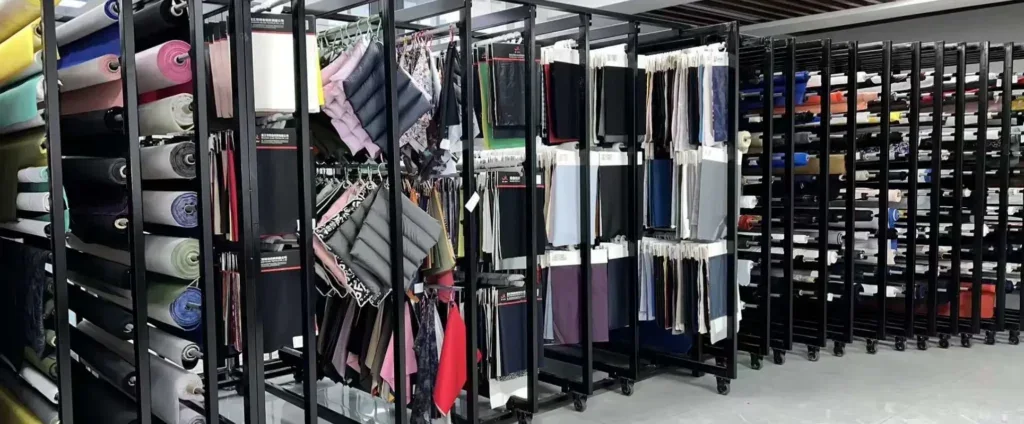
On one of our hunting-jacket fabric projects, bulk production was complete, but the fabric was not released for shipment. We were waiting for the required PFAS and after-wash water-repellency reports, followed by the customer’s written approval.
The fabric already had a C0 DWR finish. That did not remove any of those release conditions.
This is the distinction that matters when buying a fabric described as “PFAS-free”. A finish declaration explains something about the chemistry selected for production. A laboratory report provides results for the sample submitted. The customer’s approval confirms whether the evidence meets the agreed project requirements.
Those documents support different decisions. Treating them as interchangeable can leave a gap in the approval process.
For buyers arranging **PFAS-free fabric testing**, the first task is to establish exactly what needs to be verified—and which production material the evidence must represent.
Why “PFAS-Free Fabric” Is Not a Complete Specification
“PFAS-free” may be the wording in an enquiry, but it does not tell the dyeing mill or laboratory enough to proceed.
PFAS stands for per- and polyfluoroalkyl substances. It describes a broad group of chemicals, not a single substance that can be checked with one result. A report covering a defined list of PFAS therefore needs to be read against the actual requirement, rather than against the headline claim.
Before sampling, establish the destination market, intended garment and the buyer’s restricted substances list, usually called an RSL. Then confirm whether the requirement concerns intentional use, specified substances and concentration limits, fluorine screening, or a combination of these.
The distinction affects both production controls and the testing requested.
It also prevents a familiar misunderstanding: a supplier quotes a fabric against its usual test package, while the buyer assumes that a different brand protocol has been followed. Neither side discovers the difference until the report is submitted for approval.
Our Quality & Compliance approach starts with agreeing the reference and requirements before bulk production, rather than trying to define them after the goods are ready.
C0 DWR and PFAS Requirements Are Not Identical
In textile sourcing, C0 DWR is commonly used to describe a non-fluorinated durable water-repellent finish. It identifies the finishing route. It is not, by itself, an analytical result for the completed fabric.
That distinction becomes particularly important with laminated outdoor materials. A declaration for the water-repellent agent addresses that agent; it does not automatically cover the yarn, dyeing auxiliaries, other finishes, adhesive, membrane or backer used in the final construction.
“Fluorine-free” also needs a clear scope. Is the supplier describing the DWR formulation, all chemicals used in a particular process, or the finished textile? Ask which meaning is intended and what documentation supports it.
There is a separate performance question, too. A non-PFAS DWR fabric still needs to meet the agreed water-repellency requirement. AATCC TM22, for example, assesses resistance to surface wetting. It does not identify the chemicals responsible for that performance.
A good spray result is not evidence of PFAS compliance. Equally, a satisfactory PFAS report does not establish that the water-repellent finish will survive the required washing programme.
For this reason, we keep the chemical requirement separate from the initial and after-wash DWR specification. Our guide to DWR After Washing explains why the laundering and drying procedures need to accompany the spray ratings.
What “No Intentionally Added PFAS” Means for a Project
In a project specification, “no intentionally added PFAS” is an input-and-process requirement: PFAS must not be deliberately added within the defined scope.
It needs support from material and chemical documentation, not just a line on a quotation. The scope should be wide enough to cover the product being supplied. A DWR-only declaration is not sufficient documentation for a claim intended to cover an entire three-layer laminate.
Ask the supplier to identify the relevant chemical inputs and obtain declarations from the appropriate upstream suppliers. Depending on the construction, this review may include dyeing auxiliaries, softeners, water-repellent agents, coatings and lamination materials.
The production route also deserves attention. Where relevant, review shared equipment, cleaning arrangements, handling and other potential sources of unintended contamination. These are points to investigate, not evidence that contamination has occurred.
A declaration and a test report complement one another. The declaration addresses what was deliberately used; testing checks the submitted material within an analytical scope. Testing alone does not establish the history or intention behind a chemical’s presence, and a declaration alone does not measure residues.
Where the wording has a specific legal definition in the destination market, that definition must be checked rather than replaced with a supplier’s informal interpretation.
Why ND Does Not Mean Absolute Zero
The letters “ND” can look reassuring in a results table. Before accepting them, read the report’s explanation of what they mean.
ND generally means “not detected”, but the applicable threshold and reporting convention must come from that laboratory’s report. A detection limit, a quantification limit and a reporting limit are not automatically the same thing.
None of these terms means that a laboratory has established absolute zero.
Consider a purely illustrative example. A customer requires one named substance to be below 25 µg/kg, but the laboratory reports only “<50 µg/kg”. That result does not demonstrate that the customer’s lower limit has been met. It also does not prove that the fabric exceeds it. The measurement is simply not sufficiently informative for that decision.
Those figures are an example of reporting-limit interpretation, not a regulatory threshold or a CC Textile test result.
The same care is needed when a report contains many ND entries. They refer to the substances included in the test, under its stated conditions. Substances outside that scope have not been cleared by those results.
If the specification includes a sum limit, ask how non-detects are handled in that calculation. Replacing every ND with zero can create a conclusion the laboratory did not make.
The useful question is therefore not just “Does the report say ND?” It is “Does this report provide evidence at the level required by our specification?”
Test Scope, Test Method and Reporting Limits
A request for a “PFAS test report for clothing” can lead to different analytical packages. Before comparing quotations or accepting a report, find out which type of testing is being offered.
### Targeted PFAS analysis
Targeted analysis looks for a defined list of substances. Check the analyte names, CAS numbers where provided, individual results and applicable limits.
A longer list is not automatically the right list. What matters is whether the required substances are covered and whether the method is suitable for the material. Do not assume that a target panel captures every precursor, polymeric PFAS or other substance that may fall within a broader PFAS definition.
### Fluorine screening
Total fluorine testing measures fluorine from organic and inorganic sources. It does not identify each PFAS compound or produce an individual PFAS concentration.
Total organic fluorine testing addresses a different analytical fraction. It can provide useful additional information, but it is still not interchangeable with a targeted PFAS panel.
The public information on SGS consumer-product PFAS testing lists total fluorine screening, total organic fluorine screening and targeted analysis as separate options. The appropriate combination needs to follow the product and verification requirement.
### The sample and method must fit the question
Check the method reference, version and any laboratory modifications. A method developed for another sample type should not be assumed suitable for a textile without confirmation from the laboratory.
For coated or laminated fabric, agree what will be tested: the face fabric, an individual component, or the complete construction. A result reported against the mass of a whole laminate is not automatically a result for each layer tested separately.
Do not combine colours, components or batches into one test sample without an agreed basis. The sample preparation and reporting basis affect what the result can support.
Finally, review the full report, including sample descriptions, photographs where supplied, qualifications and footnotes. The laboratory’s name is important, but its logo cannot resolve a mismatch between the material tested and the fabric on the order.
Why Buyers May Test Greige, Dyed and Finished Fabric Separately
Testing at several production stages can help identify where an unexpected result needs to be investigated. It is not simply a matter of collecting more certificates.
A greige-fabric sample provides a checkpoint before dyeing and functional finishing. A sample taken after dyeing, but before final finishing, provides a second point of comparison. The completed fabric then shows the result after the intended finishing and lamination route.
In the hunting-jacket project mentioned earlier, we submitted samples to the same SGS laboratory at all three stages. The construction used a nylon-and-elastane woven face fabric, C0 DWR and a TPU membrane.
The reports were reviewed against that customer’s project-specific requirements. This was a testing route for that project, not a standard programme automatically applied to every CC Textile order.
When stages are compared, keep the methods and reporting limits aligned where practicable. A difference between two results can help narrow an investigation, but it does not identify a contamination source on its own. Sampling differences and analytical conditions also need to be considered.
The final sample matters particularly for coated and laminated products. Testing the face fabric before adding a membrane cannot verify the completed laminate. Nor can one finished-fabric result automatically clear every colour, dye lot or future reorder.
The appropriate sampling plan depends on the production route, buyer requirements and identified risks. We discuss the relationship between sampling, reports and shipment release in Outdoor Fabric Testing.
Documents to Confirm Before Bulk Approval
There are two document reviews worth separating: the agreement before production starts, and the evidence reviewed before the finished lot is released.
### Before production starts
The order file should contain a written PFAS requirement, an identified fabric construction and an agreed testing plan. Record the applicable RSL version, target substances or screening requirement, methods, limits, accepted laboratory and sampling stages.
The material declarations should refer to the intended production route. Keep them connected to the fabric code and specification rather than storing them as generic supplier information with no clear product reference.
Also agree what happens if an input changes. A different finish, membrane, adhesive or upstream supplier may require a fresh review. That decision is easier to make before production than when the shipment is waiting.
### Before the finished lot is released
Obtain the complete laboratory report and the records linking its sample identification to the relevant production lot. Review the results against the agreed criteria, including any qualifications.
A recent report is not necessarily a relevant report. It may describe a different colour, construction or finishing stage. Conversely, an earlier development report can still be useful background without being sufficient evidence for a new bulk lot.
Keep functional reports separate from chemical reports. In our hunting-jacket project, the agreed DWR requirements included AATCC 22 ratings of 90 initially and 80 after 20 washes under the agreed laundering procedure. The required reports met the customer’s criteria, and shipment proceeded after customer approval.
Those ratings and release arrangements belonged to that project. They are not a blanket specification for every fabric we supply.
Where written shipment approval is required, it should clearly identify the production and reports being accepted. A laboratory pass and the buyer’s authorisation to ship are different records. Neither should be expanded into a permanent guarantee covering unrelated products or future batches.
PFAS Fabric Verification Checklist
Before committing to bulk production—and again before releasing the finished lot—check the following:
1. **Requirement:** Is the destination market, intended use and current customer RSL identified? Is the requirement about intentional use, analytical content, fluorine screening, or a combination?
2. **Claim wording:** Does “C0”, “fluorine-free” or “no intentionally added PFAS” have a defined scope? Does the supporting declaration cover the material actually being supplied?
3. **Production inputs:** Have the relevant yarn, chemical, coating and lamination documents been reviewed? Are changes to the agreed materials or process controlled?
4. **Test scope:** Does the analytical package cover the required substances or screening parameters? Are individual limits and any sum limits distinguished?
5. **Method and sensitivity:** Are the method, version, units and detection or reporting limits stated? Can the results support a decision against the buyer’s acceptance limits?
6. **Sample traceability:** Can the tested sample be linked to the fabric code, colour, construction, finishing stage and relevant bulk lot? Is the sampling plan appropriate for the order?
7. **Separate performance evidence:** Have DWR durability and other required fabric properties been assessed independently? Are washing and drying conditions recorded where relevant?
8. **Release and future changes:** Have the complete reports and any exceptions been reviewed by the authorised person? Is written approval in place where required, and is the basis for future verification clear?
A supplier should be able to explain which documents support the fabric claim and which batch those documents represent. That is more useful to a buyer than a broad promise with no defined testing scope.
For a new project, contact CC Textile with the fabric construction, destination market, PFAS specification and required finishing. These details allow the verification work to be agreed before sampling and built into the production schedule.
Regulatory and Laboratory References
For EU-related requirements, consult the European Chemicals Agency alongside the legislation applicable to the product.
For Great Britain, refer to the UK Health and Safety Executive’s UK REACH guidance. EU REACH and UK REACH operate separately, so an EU compliance statement should not simply be treated as a complete GB assessment.
Distinguish requirements already in force from proposals and technical assessments. HSE explains the role of these assessments in its regulatory management option analysis guidance. A technical assessment is not itself a new legal restriction.
For laboratory planning, use the public method information provided by the customer’s accepted testing organisation and confirm the actual sample, scope and limits directly with the laboratory.
Further Textile Resources
For sourcing questions and discussion across the textile supply chain, Tex-Alliance is an additional textile industry resource.
You can also follow CC Textile on Instagram for fabric development, testing and production updates.
#PFASTesting #C0DWR #TextileCompliance #OutdoorFabric #FabricSourcing
Frequently Asked Questions
Does C0 DWR mean a fabric is PFAS-free?
C0 DWR describes a non-fluorinated water-repellent finishing route. It does not, by itself, verify the completed fabric against a PFAS requirement. Buyers still need relevant material declarations, an agreed testing scope and results for the appropriate production sample.
What does ND mean on a PFAS test report?
ND generally means not detected, interpreted according to the laboratory’s stated method and reporting convention. It does not mean absolute zero. Check the substances tested and the applicable detection or reporting limits before deciding whether the result meets the buyer’s specification.
Which PFAS test should clothing and fabric buyers request?
The testing package should follow the destination-market requirements, customer RSL and material being assessed. Targeted PFAS analysis, total fluorine screening and total organic fluorine screening answer different questions. Agree the scope, method, sample preparation and limits with the accepted laboratory before testing.
Can one PFAS test report cover every bulk fabric order?
Not automatically. A report covers the submitted sample and stated analytical scope. Its relevance to a bulk order depends on traceability and the agreed sampling plan. Different colours, production lots, finishes or material changes may require separate verification.