
Fabric insight
Knit vs. Woven Fabric: Differences, Pros, and Cons
Knit or woven? The answer goes beyond stretch. Compare how each construction affects movement, shape, sewing, and care, then see what to check before choosing fabric for your next apparel collection.
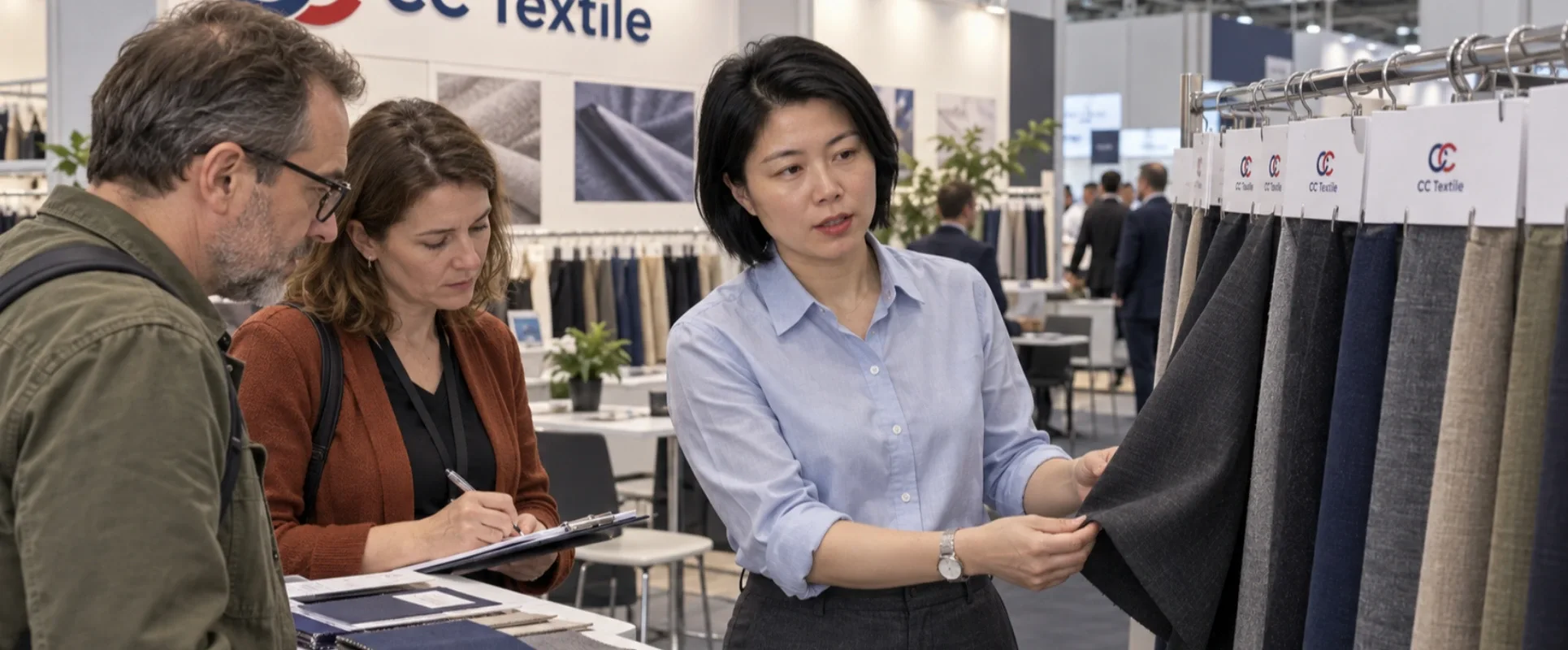
The main difference between knit and woven fabric is how the yarns form the cloth. Knits are built from connected loops. Wovens are made by interlacing lengthwise warp yarns with crosswise weft yarns.
In garment development, that often means a choice between easy movement and a more defined shape. Knits are a familiar starting point for T-shirts and close-fitting layers. Wovens are widely used for button-down shirts, tailored pants, and jacket shells.
But “knit stretches, woven doesn't” is too simple. Stretch wovens and stable double knits make the choice more interesting—and more useful for buyers.
What is knit fabric?
In a knit, yarn forms loops that connect with neighboring loops. Rows of loops are called courses, and columns are called wales.
Weft knitting includes familiar constructions such as single jersey, rib, and interlock. Warp knitting uses a different yarn-feeding arrangement and includes constructions such as tricot. These aren't interchangeable specifications, even though they all belong to the knit family.
A basic single jersey often shows small V-shaped stitches on its face and a different loop pattern on the back. Interlock has a similar appearance on both faces. Looking at both sides under magnification is more useful than relying on a stretch test alone.
Also, cotton, polyester, and nylon describe fibers—not knitting or weaving methods. A cotton T-shirt and a cotton poplin shirt can share the same fiber content while behaving very differently.
Knit fabric: the advantages
Movement is the big one. The loop structure gives many knits room to extend without requiring the yarn itself to stretch by the same amount. That's useful when a garment needs to follow the body rather than hold a crisp outline.
For T-shirts, base layers, and relaxed tops, a suitable knit can provide a flexible, comfortable fit. Rib constructions are particularly useful for cuffs and neckbands, where the fabric needs to open up during dressing and then fit back against the body.
Knits also offer more variety than a basic tee suggests. A compact double knit can give a garment more body and a cleaner shape than a lightweight single jersey. The choice isn't limited to either a loose knit or a rigid woven.
Knit fabric: the drawbacks
Stretch and recovery are different properties. A fabric may extend easily yet remain stretched after the load is removed. In a garment, that can mean a baggy knee, an elongated elbow, or a neckline that no longer sits properly. Check residual growth as well as extension.
Dimensional stability needs attention, too. Some knits change size or develop skew after laundering. Fiber, yarn, stitch construction, processing tension, finishing, and care all influence the result. Don't accept a single shrinkage allowance for every knit in a collection.
There are production considerations as well. Basic single jersey can curl at cut edges, while interlock generally lies flatter. Fabric distortion and needle damage can complicate sewing. The needle point, stitch construction, thread, and feed settings need to suit the actual fabric; copying a woven sewing setup isn't a reliable shortcut.
What is woven fabric?
Woven fabric has two crossing yarn systems. Warp runs along the length; weft runs across the width. The way those yarns pass over and under one another creates the weave.
Plain weave, twill, and satin are the main basic weave families. They can produce very different surfaces: a simple crossing pattern, a diagonal twill line, or a smoother face with longer yarn floats.
Woven doesn't mean stiff. A fine, fluid woven and a firm workwear twill are both woven fabrics. Yarn size, weave, density, fiber content, and finishing determine much of the difference you feel in your hand.
Woven fabric: the advantages
For designs that need a defined outline, a stable woven is a useful starting point. Think of a shirt placket, a shaped collar, a welt pocket, or a tailored trouser leg. Lower stretch along the main fabric directions can make those details easier to control.
The range of constructions is another advantage. You can develop a lightweight shell, a textured cotton-rich overshirt, or a substantial utility fabric without leaving the woven category.
A woven can also provide movement when the yarns and construction are designed for it. That matters for buyers who want a clean-looking pant or jacket without a completely rigid feel. You don't necessarily have to move to knit fabric to make the garment more flexible.
Woven fabric: the drawbacks
With a low-stretch woven, the pattern has to provide sufficient room for movement. A sleeve that looks fine on a hanger may pull across the back when the wearer reaches forward. Stretch fabric can help, but it doesn't replace a well-developed fit.
Cut edges can fray, so seam allowances and edge finishing need to be planned. Some constructions are also vulnerable to seam slippage, where yarns move apart near the stitching. Longer floats can introduce snagging risks; a smooth satin face is not automatically a hard-wearing one.
Densely woven fabrics may show seam puckering if the sewing setup is unsuitable. Coats' guide to seam puckering explains why thread tension, yarn displacement, and uneven feeding all deserve a check before blaming the fabric.
Finally, woven construction does not eliminate shrinkage or creasing. Those still need to be assessed on the finished fabric and garment.
Stretch woven fabric: a useful middle ground
A stretch woven combines a woven structure with yarns or construction engineered to provide extension. Spandex, also called elastane, is one route. Some woven fabrics achieve stretch through yarn crimp and processing without spandex.
For a concrete example, CC-2829 lightweight nylon stretch fabric is listed as a plain weave containing 84% nylon and 16% spandex at 80 GSM (grams per square meter). The catalog identifies running shorts and lightweight active layers as development directions.
It's woven, despite its spandex content. The composition does not tell you its measured stretch percentage or recovery. Request those results in both length and width before deciding whether it fits your brief.
When a supplier describes a fabric as four-way stretch, ask what that means in measurable terms: extension in each direction, the test conditions, and the amount of growth remaining afterward.
Which is more breathable or durable?
Neither label settles either question.
Airflow depends on the finished structure, including its openness and any coating or lamination. An open woven may allow more air through than a dense knit. For an airflow requirement, compare air-permeability results under the same conditions; ASTM D737 is one established method. Moisture-vapor transfer, sweat wicking, and drying speed are separate properties, not substitutes for an air-permeability result.
Durability also needs a more specific question. Are you concerned about abrasion, tearing, bursting, snagging, pilling, or seam failure? Those are different ways a fabric or garment can deteriorate.
Pilling can affect both knits and wovens. Fiber characteristics, yarn construction, fabric structure, and finishing all matter. Don't approve a fabric simply because it is woven, or reject it simply because it is knit. Choose tests that match the product's likely wear conditions and the laboratory method's scope.
How to choose for the garment you're developing
For a T-shirt or close-fitting base layer, begin with a suitable knit and compare hand, recovery, opacity, and wash performance. For a shirt or structured overshirt, begin with a woven and focus on drape, collar shape, seam appearance, and movement through the shoulders.
Activewear is where a simple rule breaks down. A close-fitting legging and a loose running short need different fabric behavior. A stretch knit may fit the first brief, while a lightweight stretch woven may fit the second.
Travel pants are worth comparing in both constructions. Suppose the brief calls for comfortable sitting, a tidy pocket opening, and minimal knee bagging. Sample a suitable stable knit and a stretch woven, with the pattern adjusted for each fabric. Review movement, recovery, pocket distortion, and appearance after care. The fabric that looks best as a flat swatch may not make the better pair of pants.
Sometimes the answer is both. A jacket can use a woven shell with knitted rib cuffs. In that case, evaluate how the components behave together, including their different stretch and shrinkage characteristics.
What to confirm before ordering bulk
Ask for more than fiber content and GSM. For wovens, request the weave, warp and weft yarn specifications, and fabric density. For knits, request the knit structure, yarn specification, and relevant stitch-density information. Machine gauge alone is not the finished fabric specification.
For either construction, confirm usable width, finished weight, color, hand, and finishing route. Agree on stretch and growth requirements where relevant, then establish dimensional-change and appearance limits after the intended care procedure. AATCC's laundering methods distinguish fabric measurements from garment measurements; a fabric swatch and a sewn garment don't answer exactly the same questions.
Make the garment trial with the intended trims and sewing setup. Keep the approved sample identified by fabric code and finish, and connect any test report to that specification.
Compare cost per finished garment, too. A knit quoted by kilogram and a woven quoted by linear meter cannot be compared directly. Usable width, GSM, cutting yield, shrinkage allowances, and sewing operations all belong in the calculation. Neither construction is automatically the cheaper option.
Finding the right starting samples
CC Textile focuses on woven apparel fabrics, including stretch woven constructions. Send a garment sketch or reference swatch and explain the result you need: a softer hand, more movement, a cleaner pocket opening, or a more structured silhouette.
For collections that also need a specialist knit supplier, Textile Alliance provides a place to ask construction questions and post sourcing requests. Describe the required knit structure and application rather than asking only for “stretch fabric.” A useful supplier response should lead to samples and verification, not replace them.
Send your fabric brief to CC Textile with the application, target finished weight, quantity by color, required performance, and delivery needs. The goal is to compare a few relevant fabrics—not choose an entire category on reputation alone.
Frequently Asked Questions
Is polyester fabric knit or woven?
It can be either. Polyester is a fiber, while knitting and weaving describe how yarns form a fabric. Polyester jersey is knitted; polyester taffeta and many polyester ripstop fabrics are woven. Ask for the construction as well as the composition, because fiber content alone does not establish stretch, drape, or suitability for your garment.
Can woven fabric stretch without spandex?
Yes. Certain woven fabrics obtain stretch through yarn crimp and the way the yarns and fabric are processed. The amount and direction of stretch vary by construction. Ask for measured extension and residual growth under agreed conditions. A fabric that stretches diagonally is not necessarily engineered to provide useful stretch and recovery along its length or width.
Is knit fabric more breathable than woven fabric?
Not necessarily. Air permeability depends on the finished fabric structure, yarns, density, and treatments. An open woven can allow more airflow than a dense knit. Compare test results using consistent conditions. Air permeability, moisture-vapor transfer, wicking, and drying speed describe different aspects of comfort, so decide which property your garment actually needs.
Should I choose knit or woven fabric for activewear?
Choose around the garment rather than the category name. Stretch knits are often useful for close-fitting pieces, while stretch wovens are worth sampling for loose shorts, travel pants, and lightweight shells. Compare movement, recovery, opacity, seam behavior, and appearance after care in the intended garment. Spandex percentage alone does not tell you which fabric will perform better.